
Half day tour and overnight stay in luxury tents
Overview
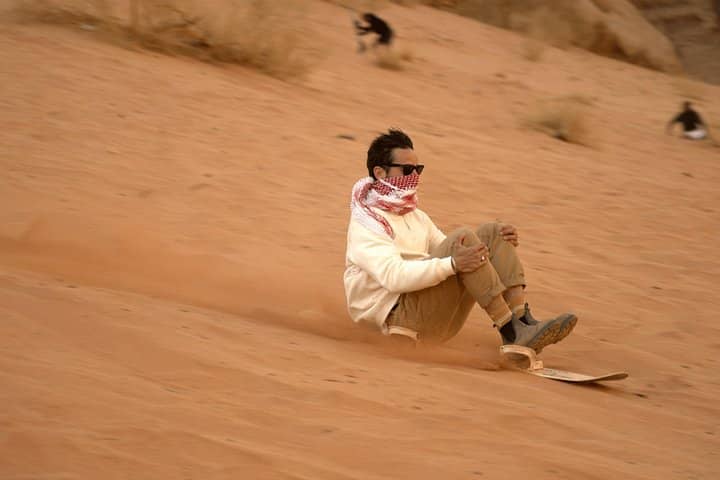
Take an 4-hour long Tour in our 4x4, experiencing the "Highlights" of the Wadi Rum Protected Area. Have the opportunity to try Sand-Boarding in the sand dunes of the Wadi Rum desert for free!
Our starting point is the Wadi Rum Rest House in the Wadi Rum Village which is located 7 km from the Visitor Center. From there we will start an amazing adventure exploring hidden canyons, weirdly shaped rocks and ancient sites. You will have the chance to enjoy our traditional Bedouin lunch and watch the well-known sunset of the desert. Check all the place we are going to visit on the itinerary within the tour details.
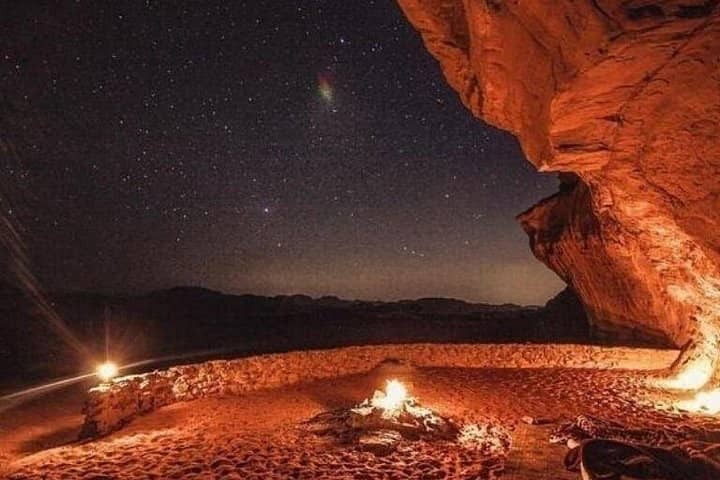
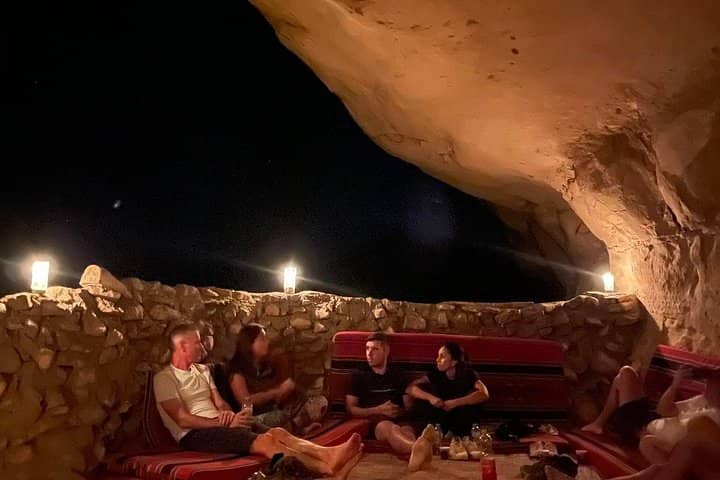
For those that want to experience more and spend the night as a true Bedouin we offer the option "Traditional Overnight Stay" You will have dinner and sleep in our traditional Bedouin Cave or Camp. The next day, after Breakfast, we will drop you off back to the Rest House.
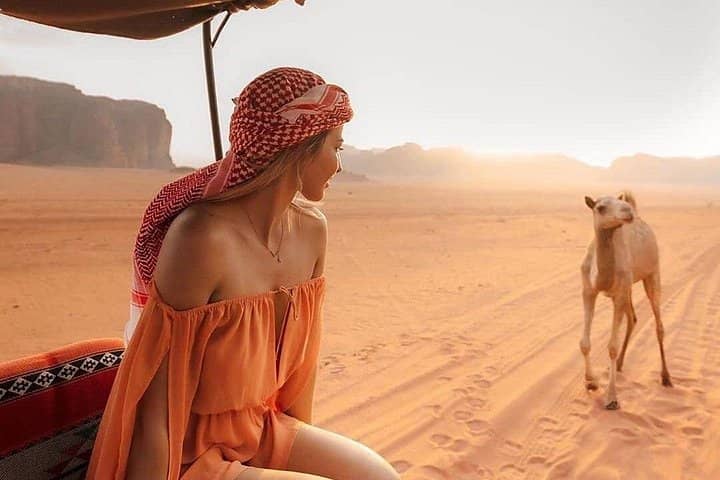
Make this experience even more unique by adding a Camel Ride for only 20JD/person.
What you’ll do
The spring is at the top of a short scramble – head for the fig tree, located just 2km (1.2 miles) south-west of the village of Rum. The spring was named in honour of Lawrence’s evocative description in the Seven Pillars of Wisdom: ‘’In front of us a path, pale with use, zigzagged up the cliff-plinth…From between [the] trees, in hidden crannies of the rock, issued strange cries; the echoes, turned into music, of the voices of the Arabs watering camels at the springs which flowed out three hundred feet above ground’’. Although the pool itself is largely unprepossessing, being a stagnant puddle, the views across the desert are truly spectacular.
Khazali Canyon in Wadi Rum is the site of petroglyphs etched into the cave walls depicting humans and antelopes dating back to the Thamudic times. This narrow canyon contains numerous Nabataean rock carvings of people and animals. Jebel Khazali, a peak situated in the center of Wadi Rum Protected Area opens up in a narrow fissure of about 100 m length. Its inner walls are covered with Thamudic, Nabatean, and Islamic inscriptions, as well petroglyphs depicting humans and animals. Remarkable are the soles of feet petroglyphs, which probably had religious significance. In 1932 the French epigraphist Savignac noted the engravings in the cleft and published some of them in 1934. The petroglyphs and inscriptions of Khazali Siq form an impressive collection being one of the major tourist attractions in Wadi Rum. At the end of the canyon, there are several man-made rock-cut basins for water collection.
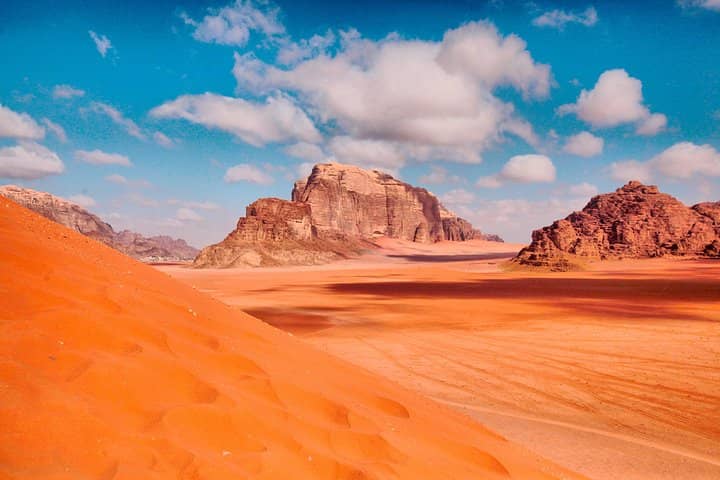
Among the vast expanses of rust-coloured sand in the Wadi Rum desert, the Red Sand Dune, or ‘Al Hasany’ in Arabic, is one of the most famous ones. Officially named Al Ramal it has become better known by its descriptive name. It stands out against a cliff side like it is part of the mountain. Coloured red by the presence of iron oxide, this dune is fine and soft underfoot making it perfect to walk up barefoot!
From €64
Book on Viator