
Gyeongju UNESCO Private Tour with Busan or Gyeongju Pick-up
Overview
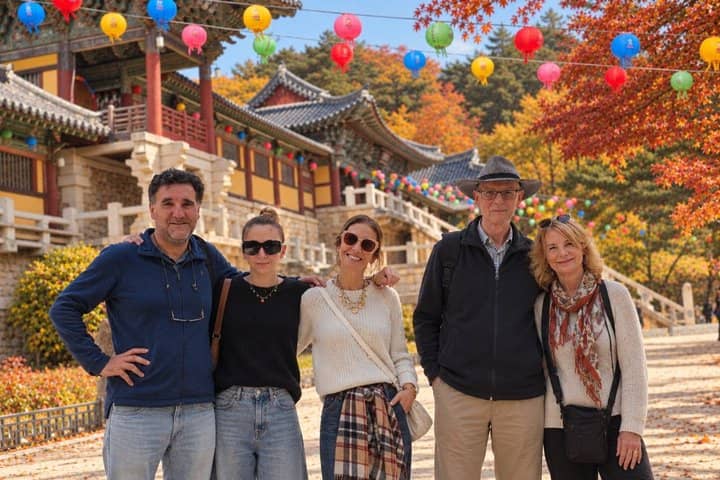
Explore Gyeongju your way with a private tour led by a knowledgeable, licensed English-speaking guide. Enjoy a customizable itinerary with flexible pickup and drop-off in either Busan or Gyeongju, making your journey comfortable from start to finish.
Go beyond the typical tourist experience and discover authentic local flavors at carefully selected restaurants loved by locals. No tourist-group restaurants, just great local food, fascinating stories, and a personalized journey through Gyeongju.
What you’ll do
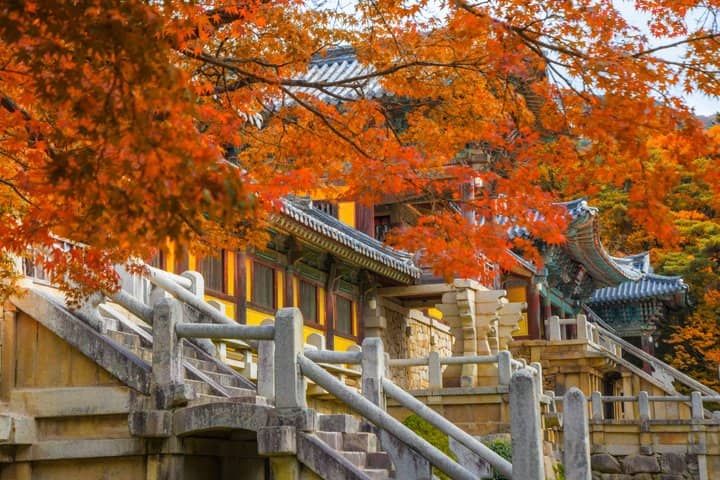
Bulguksa Temple, a UNESCO World Heritage site in Gyeongju, is a masterpiece of Silla-era Buddhist architecture. Built in the 8th century, it features stunning stone pagodas, intricate wooden halls, and a peaceful setting that reflects Korea’s spiritual heritage. You can explore the temple’s rich history, admire national treasures like Dabotap and Seokgatap pagodas, and experience the tranquility of this sacred cultural landmark.
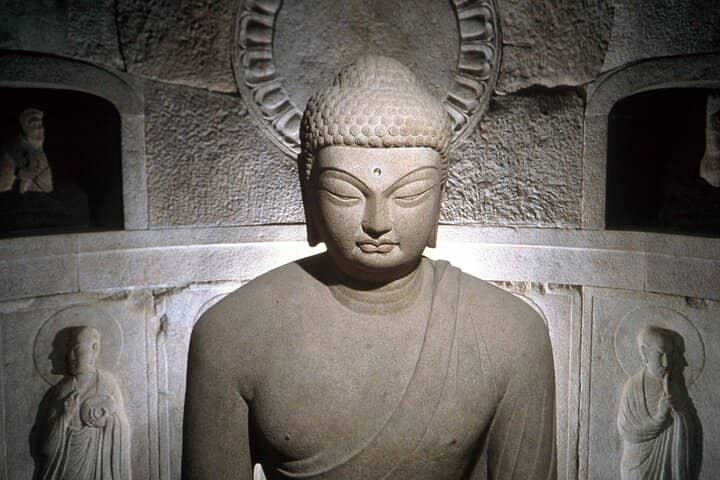
Seokguram Grotto, another UNESCO World Heritage site near Bulguksa Temple, is a stunning example of Buddhist art from the 8th century. Nestled in the mountains, the grotto houses a serene granite Buddha statue surrounded by detailed carvings of bodhisattvas and guardians. This sacred site reflects the spiritual and artistic achievements of the Silla dynasty, offering you a peaceful and awe-inspiring cultural experience.
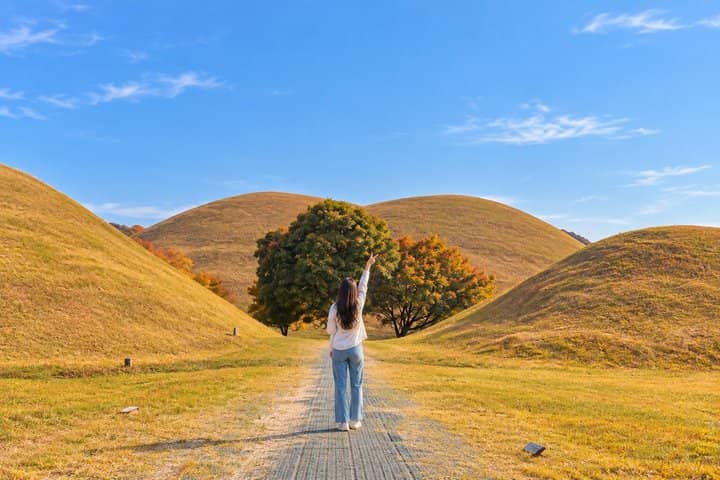
Daereungwon is a royal tomb complex in Gyeongju, home to ancient burial mounds from the Silla dynasty. Among them, Cheonmachong, or "Heavenly Horse Tomb," stands out for its excavated artifacts and murals, offering a rare glimpse into Silla royal life. Visitors can enter the tomb to see treasures such as a golden crown and learn about Korea's rich history in this peaceful, park-like setting surrounded by grassy mounds.
Gyeongju National Museum showcases over 100,000 artifacts from the Silla Kingdom (57 BC–935 AD), including the famed 20t Bell and golden crowns from royal tombs. Its permanent exhibitions span Silla history, Buddhist art, and treasures from Anapji Pond.
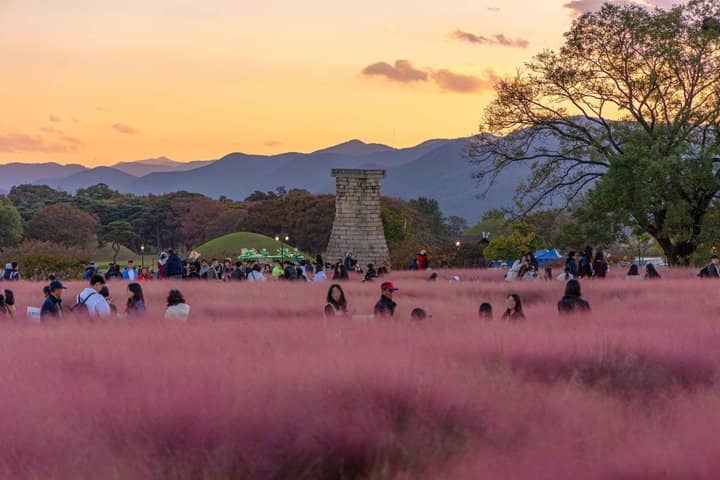
Cheomseongdae Observatory was built during Queen Seondeok's reign (632–647 CE), is the oldest surviving astronomical observatory in Asia. Standing 9.17 meters tall, this cylindrical stone tower comprises 365 granite blocks, symbolizing the days of the year. Strategically placed windows and openings allowed ancient astronomers to observe celestial events, aiding in agricultural and political decisions.
From €170
Book on Viator